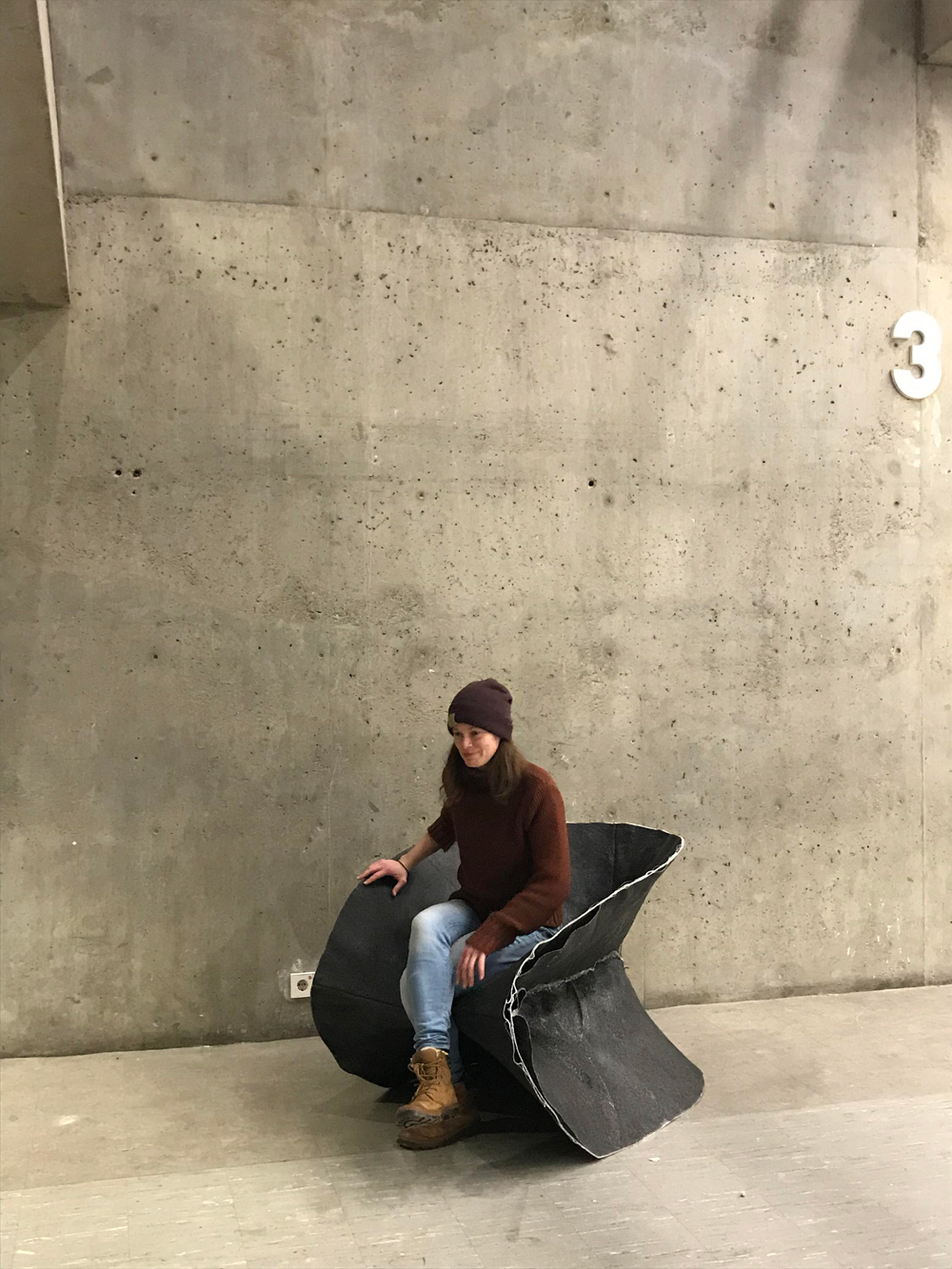
Chair „x“
MML III Design Project
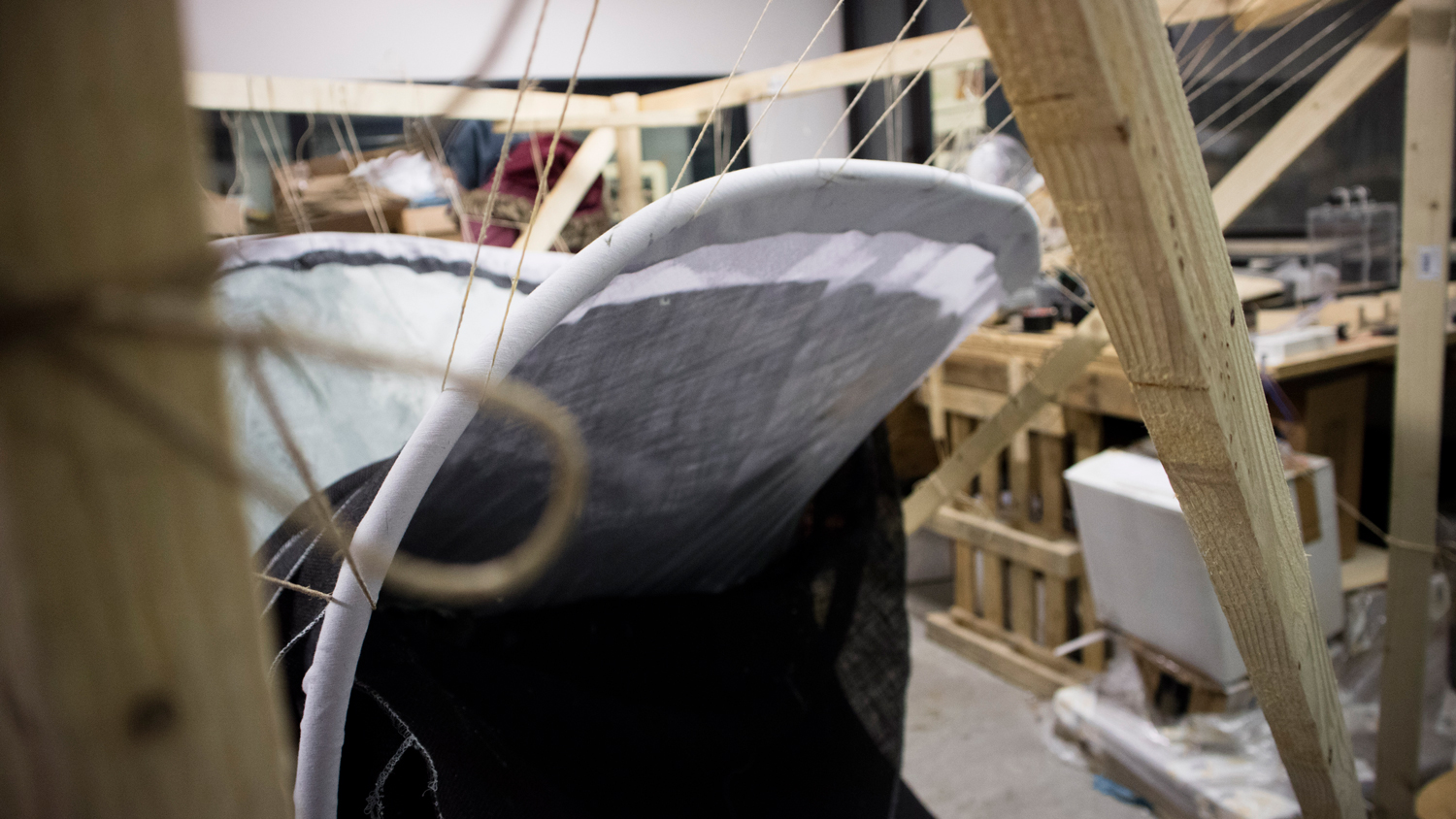
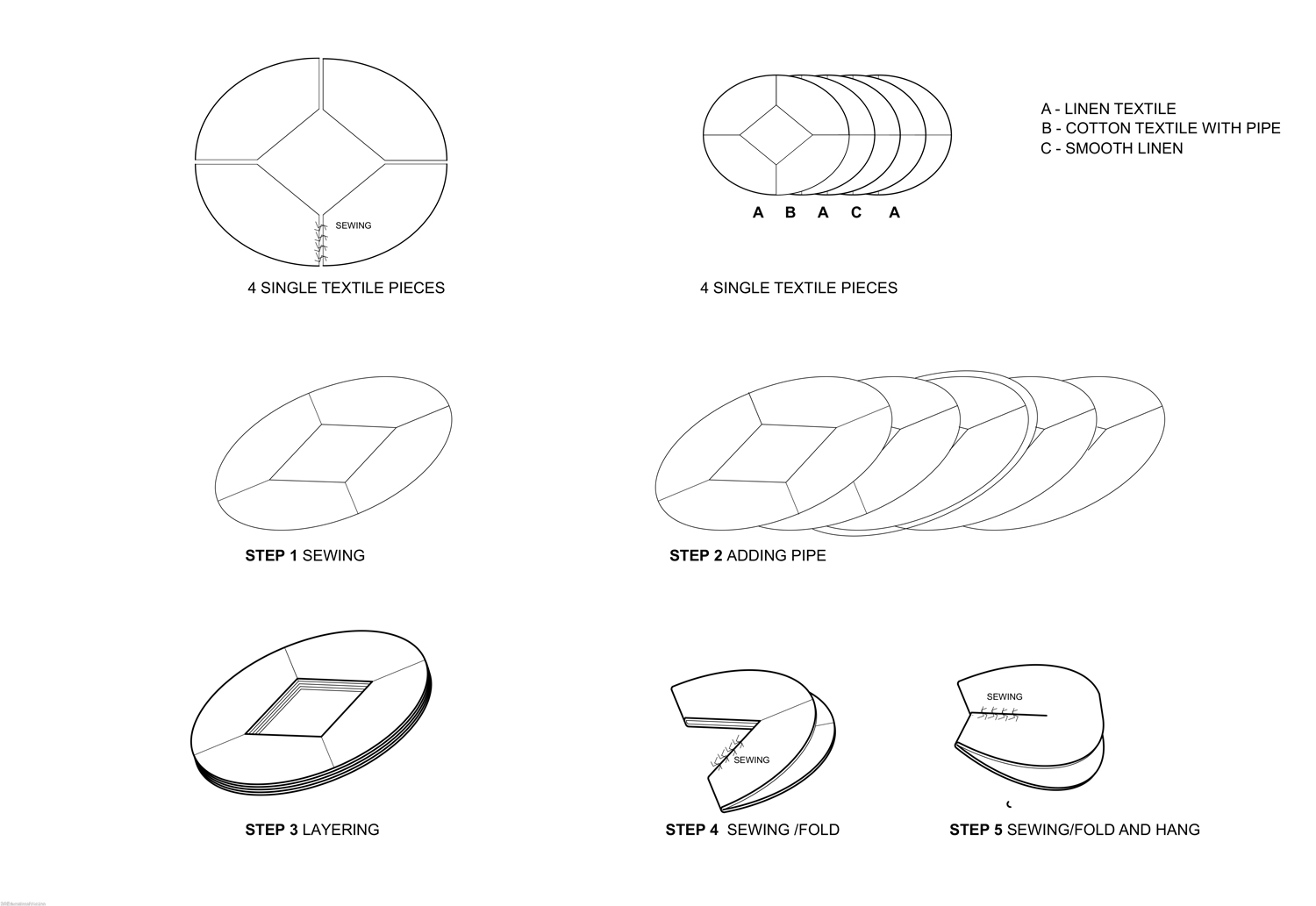
Chair X was made out of a combination of textile layers and Epoxy resin. By starting with a planar ellipse with a cutout rhombus in its center, it is possible to bend this inicial geometrical shape into the desired result. To achieve the necessary structural capacity, several textile layers were needed. A plastic pipe was integrated into one of the layers in order to facilitate the assembling of the chair.
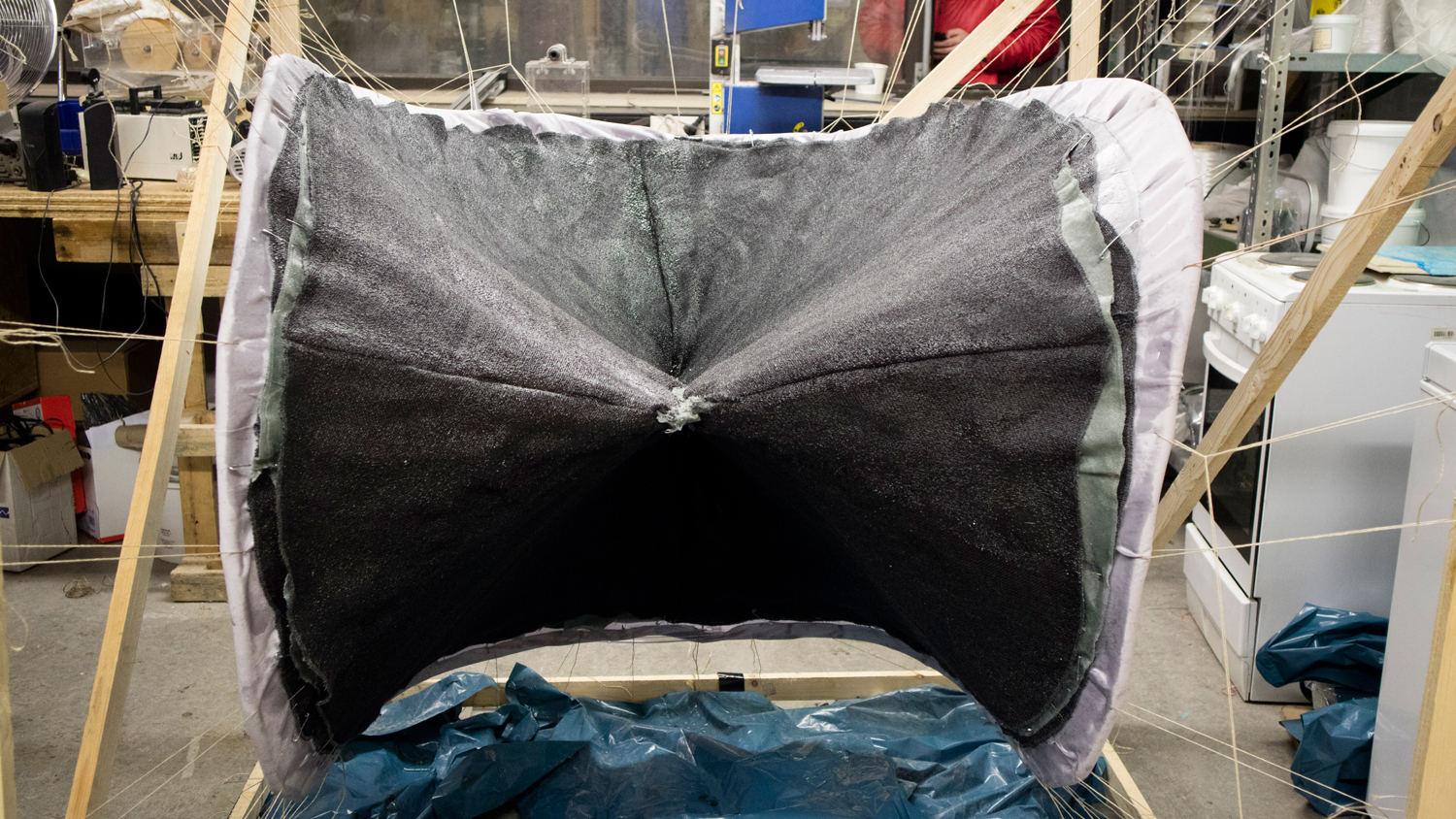
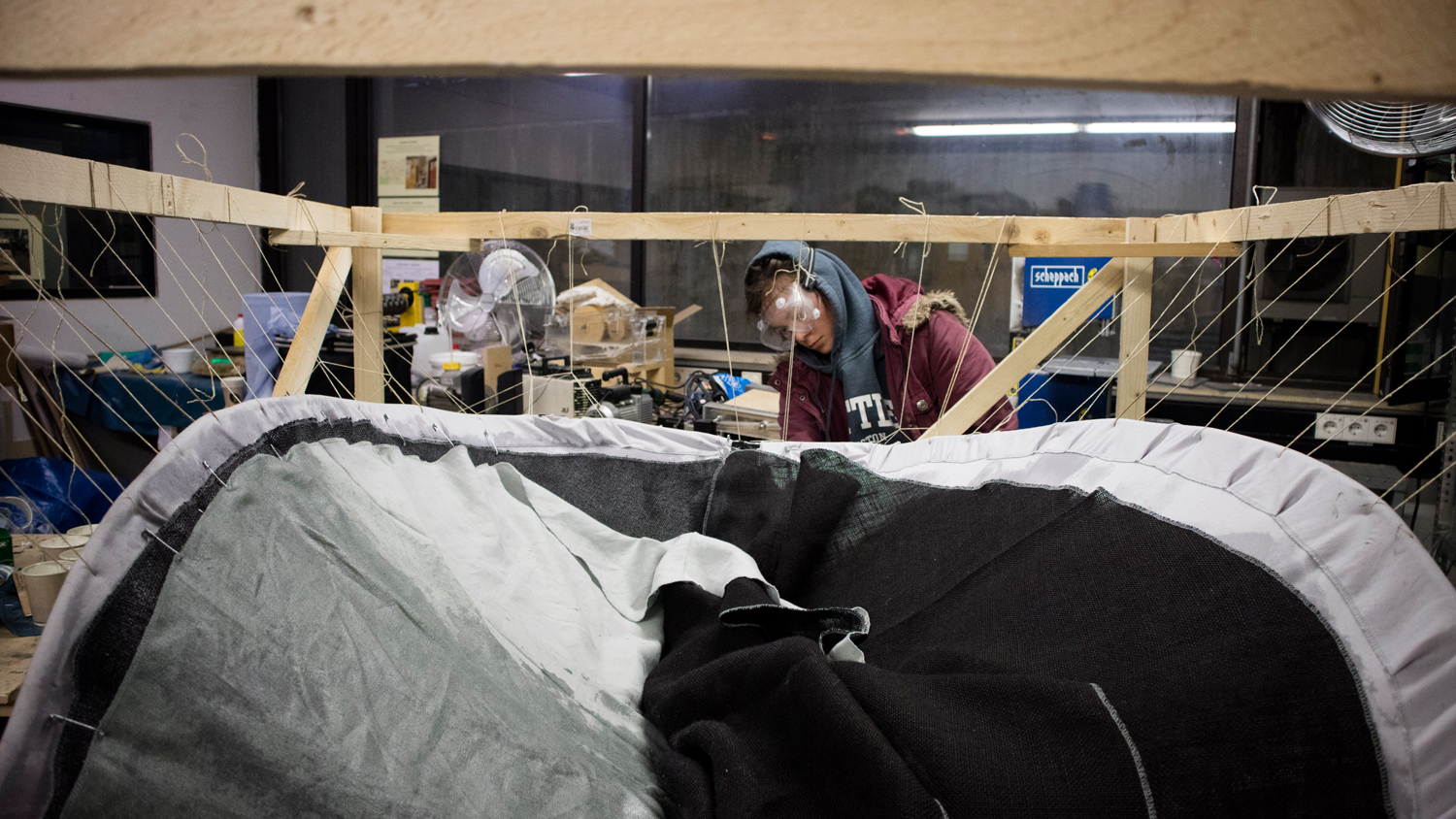
To improve its structural properties, two kinds of textiles were combined. Linen, with rougher fibers, has a better absorbing capacity while cotton improves the the tension capacity. To assemble the chair, the layers were sewed together and hanged onto a wooden frame. The integrated pipe prevented deformation to the chair by tensile forces. Once the chair was tensed into its final shape, resin was applied layer by layer and left to dry.
AIM
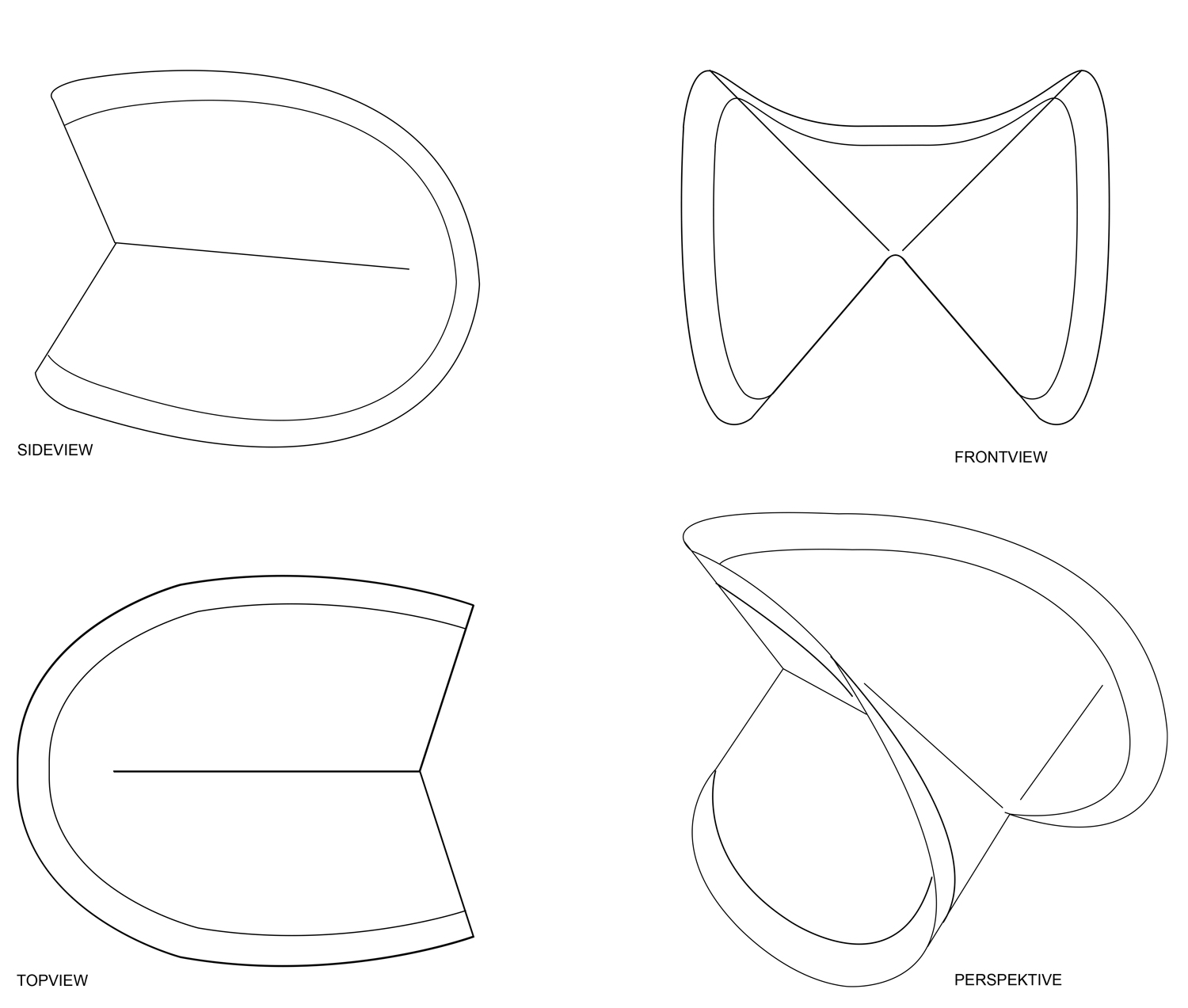
The „Chair X“ aims to create a piece of furniture that challenges the way of shaping, producing and assembling a chair through simple geometrical design. Starting with a planar ellipse with a cut out rhombus in its center, and through a simple folding technique, the chosen design for this chair allows to build a 3Dimensional hyperbola out of a planar surface. The aimed result: smooth curves that after being assembled together create an ergonomic shape naturally qualified to become a chair.
PROCESS
As we tried to develope a bending and flexible form which could be reversible we got inspiration from organic forms and started working with an planar ellipse as a base. It all started with first sketches and continued with a lot of papermodels. We found plenty of diffrent ways how to bend a ellipse/circle out of paper into a 3dimensional shape.
FINAL DESIGN
It took us quite a while to decide on a design since there were so many possibilities. But we finally chose the most smooth and asthetic papermodel . Its been easy to fold and very organic and dynamic.
MATERIAL DESIGN CONCEPT
In order to achieve the desired assembling method it was important to choose the right material. Flexibility and the capacity to fold into shape were key, so the decision shifted automatically to textiles.
The next important feature for our chair had to be that once the planar shape was folded and locked into position it would have the structural capacity to withstand the resulting forces of a human being sitting on it. In order to do so, we had to combine the textile properties with another material to improve its compressive strength. We decided to use Epoxy-Resin.
Textiles have a relative good tensile strength, are light and thin, and have the capacity of absorbing liquids, so when the resin was applied, the different textile fibers absorbed it and hardened after the required curing time, leaving a rigid and fixed shape.